What Is Blue Light Therapy? Mechanisms, Applications, and Evidence
Blue light therapy uses 415–480nm wavelengths for two distinct clinical purposes: killing acne-causing bacteria and regulating circadian rhythms and mood.
By LightTherapyIQ Editorial Team, Editorial
On this page
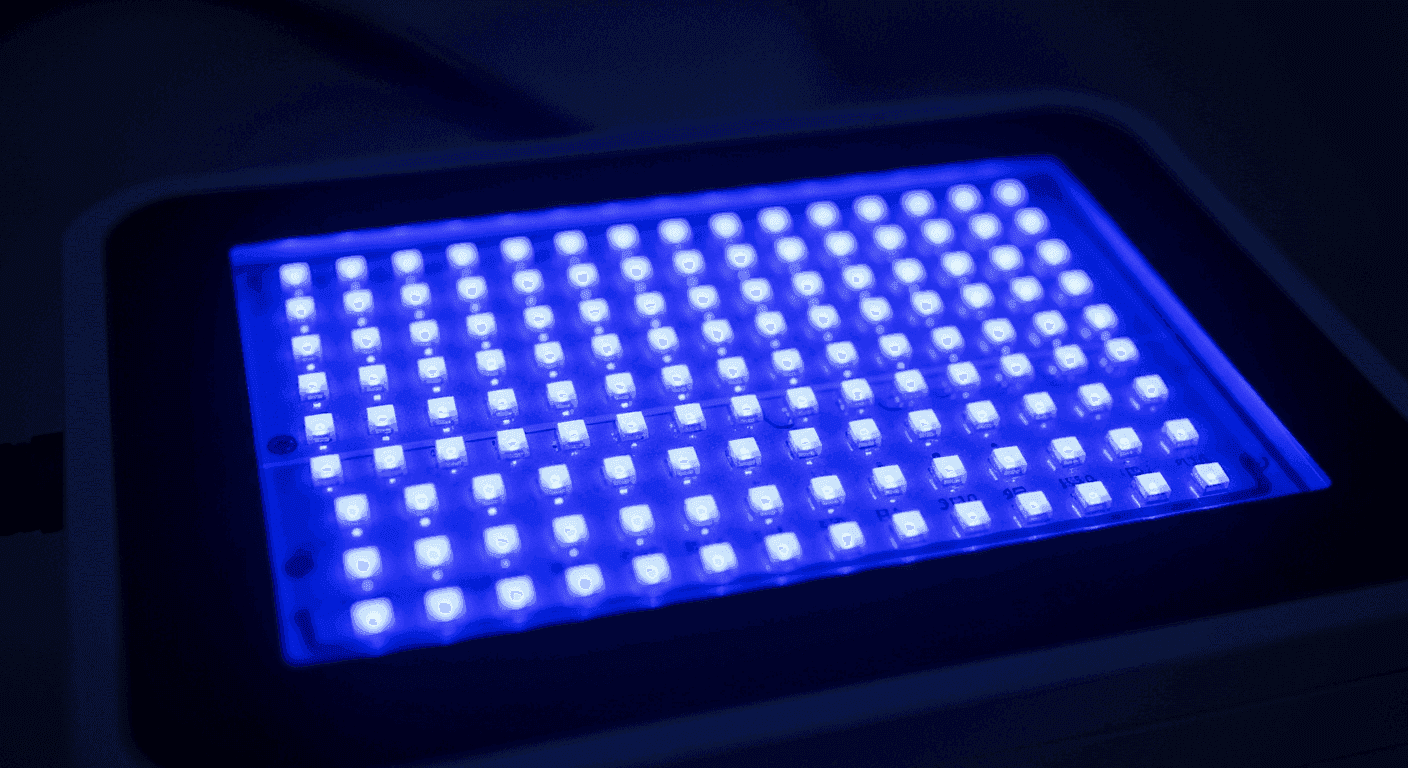
Blue Light Serves Two Unrelated Clinical Purposes
The term "blue light therapy" covers two entirely different therapeutic mechanisms that happen to use overlapping wavelength ranges.
Dermatological blue light (415nm): Kills Propionibacterium acnes (P. acnes) bacteria through a photochemical reaction. Used for acne treatment. Applied directly to the skin. Has no effect on mood or sleep.
Phototherapy blue/white light (480nm, or broadspectrum bright light): Stimulates retinal photoreceptors to regulate circadian rhythm and treat seasonal affective disorder (SAD). Requires the light to enter the eyes. Has no antibacterial effect on skin.
These applications are physiologically unrelated. A blue light lamp for SAD is not the same device as a blue LED panel for acne, even if both produce blue wavelengths. Conflating them is the primary source of confusion in consumer discussions of "blue light therapy."
The Acne Mechanism: Porphyrins and Singlet Oxygen
P. acnes bacteria, the primary bacterial driver of inflammatory acne, produce porphyrins as metabolic byproducts. Porphyrins are photosensitive molecules. When they absorb blue light in the 415nm range, they produce singlet oxygen and free radicals. These reactive species damage bacterial cell membranes and kill the bacteria.
This is a targeted photochemical reaction. The porphyrin absorption peak at 415nm is specific enough that the therapeutic effect is concentrated in bacteria containing porphyrins. Surrounding skin cells don't have the same porphyrin concentration and absorb less destructive energy.
The bactericidal effect is dose-dependent. Higher irradiance and longer sessions kill more bacteria. The clinical response for acne isn't instantaneous. It requires multiple sessions as the bacteria are gradually reduced in follicles and sebaceous glands.
Combined treatment protocols use red light (630nm) alongside blue to add anti-inflammatory effects. The blue kills bacteria; the red reduces the inflammatory response driven by bacterial byproducts. This combination outperformed blue light alone in Papageorgiou et al.'s 2000 controlled trial in the British Journal of Dermatology.
The Circadian Mechanism: Melanopsin and ipRGCs
The second mechanism operates entirely through the eyes, not the skin.
The human retina contains intrinsically photosensitive retinal ganglion cells (ipRGCs), a third category of photoreceptor discovered in 2002. Unlike rods (used for night vision) and cones (color and daylight vision), ipRGCs contain a photopigment called melanopsin. Melanopsin has its peak absorption at approximately 480nm, in the blue portion of the spectrum.
ipRGCs project primarily to the suprachiasmatic nucleus (SCN), the brain's master circadian clock, and to other brain regions involved in arousal, mood, and the sleep-wake cycle. When these cells receive sufficient blue-range light, they signal the SCN to suppress melatonin production and shift the circadian phase toward wakefulness.
This is why bright morning light exposure improves alertness and why bright blue-enriched light at night delays sleep. The clinical application (phototherapy for SAD) harnesses this mechanism by delivering intense, blue-enriched light to the eyes in the morning, resetting a phase-delayed circadian clock.
Most SAD therapy devices produce 10,000 lux of white light (which contains significant blue spectrum content) rather than pure blue light. Clinical research on narrow-band blue light for SAD shows similar efficacy with lower total light intensity, but the 10,000-lux white light box remains the most studied format.
What Blue Light Therapy Is Not
Consumer marketing has conflated therapeutic blue light with the "blue light hazard" concept from screens and LEDs. These are not the same thing.
Screen blue light: Smartphone and monitor screens emit blue wavelengths at irradiances several orders of magnitude below therapeutic devices. The concern about blue light from screens centers on melatonin suppression in the evening (disrupting sleep) — not skin damage or health risk from the light itself. Blue light blocking glasses address circadian disruption from evening screen use.
Blue light therapy: Uses much higher irradiances, delivered under controlled conditions, for specific therapeutic purposes. A 415nm blue light panel for acne operates at 40–80 mW/cm² — vastly more intense than any screen.
Treating "blue light from screens" as equivalent to "blue light therapy devices" produces confusion in both directions: overestimating screen risks and underestimating the therapeutic specificity required for clinical applications.
FDA Status
Acne treatment: The FDA has cleared specific blue light devices for acne treatment. Clinical clearance covers devices used by dermatologists for moderate inflammatory acne, as well as several consumer devices. PDT (photodynamic therapy) using aminolevulinic acid (ALA) as a photosensitizer with blue light is FDA-approved for actinic keratoses and used off-label for severe acne.
SAD phototherapy: Light therapy for SAD is not an FDA-approved device category in the same way pharmaceutical devices are, but it's clinically established and major clinical guidelines include it as a treatment option for seasonal affective disorder. Standard 10,000 lux SAD lamps aren't classified as medical devices requiring clearance.
Evidence Summary by Application
Blue light for acne: Multiple controlled trials and a meta-analysis. Papageorgiou et al. (2000) remains the most cited; combined blue-red outperformed benzoyl peroxide. Evidence quality: moderate to strong for mild-to-moderate inflammatory acne. Doesn't match the efficacy of systemic antibiotics or isotretinoin for severe acne.
Blue/bright light for SAD: Extensive randomized trial evidence finds bright light therapy effective for seasonal depression, with growing evidence for non-seasonal depression. Effect sizes comparable to antidepressants in several head-to-head trials. Response typically seen within 1–2 weeks of daily morning use. Evidence quality: strong for seasonal depression, moderate for non-seasonal.
Blue light for other skin conditions: Research ongoing for psoriasis (as part of combination approaches), actinic keratoses (with PDT), and wound healing. Evidence less developed than for acne.
Safety Considerations
Blue light at therapeutic irradiances carries specific safety considerations:
Eye protection for skin treatment. The 415nm acne-treatment range falls within the violet-blue spectrum that poses potential retinal risk at high irradiances. Eye protection is required during skin treatment sessions.
Skin photosensitization. PDT protocols deliberately sensitize skin before light exposure. In non-PDT settings, certain photosensitizing medications increase skin sensitivity to blue light. (See contraindications in the red light safety section — the same drug categories apply.)
Evening circadian disruption. For people using blue light for acne treatment, session timing matters. Evening exposure to 415nm blue light will suppress melatonin. Morning or early afternoon sessions avoid this effect.
SAD lamp timing. SAD lamps are prescribed for morning use, specifically to phase-advance the circadian clock. Using a 10,000 lux lamp in the evening can shift the circadian phase the wrong direction, worsening sleep timing.
The detailed evidence for each application is covered in the dedicated articles on blue light therapy for acne and blue light therapy for seasonal depression.
LightTherapyIQ covers the clinical evidence on light therapy devices. No manufacturer pays for editorial coverage.